Wine

Wine

There are 544 products.

Showing 61-72 of 544 item(s)

Active filters

  • Categories: Red Wine Italy
  • Categories: Red Wine South Tyrol
  • Categories: White Wine Abroad
  • Categories: White Wine South Tyrol
Cabernet Franc Riserva...

Cabernet Franc Riserva...

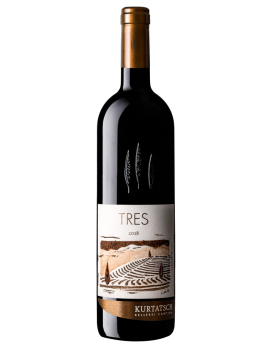
<br /><br />Cabernet Franc has been cultivated in Kurtatsch since the founding years of the winery in 1900, thanks to the southern location and favourable exposure of the area. The<br />warm microclimate and well-drained soils provide ideal conditions for the ripening of this noble grape variety.<br /><br />VENTIS, derived from the Latin word for wind, impresses with a pronounced, multi-layered and spicy aromatic profile, complemented by subtle notes of dark berries.<br />Ethereal nuances of mint and juniper intertwine with pepper, liquorice and red currants, creating a clear alpine character. On the palate, the wine is fresh and precise:<br />vibrant acidity and exceptionally smooth tannins lend tension and drinkability, making VENTIS already expressive yet approachable in its youth. VENTIS: the Refreshing<br />One.<br />
Price €21.20
Chardonnay 2023 St....

Chardonnay 2023 St....

Chardonnay<br />This popular grape variety is at home all over the world. In the best individual vineyards of the municipality of Eppan, however, the grapes develop so excellently that they<br />produce a high-quality, powerful yet elegant top wine. Since 1986, the Chardonnay has been part of the Sanct Valentin line and is one of the most important wines of the<br />house. Excellent balance, well-integrated acidity and excellent storage potential.<br /><br />Grape variety: Chardonnay<br />Vine age: 10 to 32 years<br />Growing region:<br />Site: selection of the best single vineyard sites in the municipality of Eppan (450-550m).<br />Exposure: south-east, south-west<br />Soils: sandy calcareous gravel soils (or calcareous gravel soils)<br />Method of cultivation: Guyot<br />Harvest: Late September to early October, hand harvest and grape selection.<br />Vinification: Fermentation, malolactic fermentation and ageing on the lees in barrique tonneaux. Assemblage after almost a year and further maturation for at least eight<br />months in concrete barrels.<br />Yield: 45 hl/ha<br />Analytical data:<br />Alcohol content: 14 %<br />Acidity: 5,55 gr/lt<br />Drinking temperature: 10-12°.<br /><br />Recommended consumption:<br />Likes to accompany strong dishes such as 'fritto misto' (fried seafood), porcini ravioli with cream sauce or risotto with grey cheese and chilli. Also goes well with fried<br />chicken or Wiener schnitzel.<br />Storage/potential: 10 years and more<br />
Price €36.40
Blauburgunder St. Valentin...

Blauburgunder St. Valentin...

<br />South Tyrol DOC<br />Pinot Noir Riserva<br />Sanct Valentin<br /><br />Pinot Noir has been cultivated in South Tyrol since 1850 and is also known in many places as Pinot Noir. It is the winery's most important red wine. This grape variety is a<br />very special challenge for the winemaker, as it is very demanding in terms of soil and climate, and must also be processed with special care in the cellar. For the Pinot Noir<br />Sanct Valentin, which has been part of the prestige line since 1995, only grapes from the best vineyards and oldest vines are used. Extremely low yields and the greatest<br />care produce an elegant and highly sensual wine, characterised by structure, balance and fine tannins.<br /><br />Eye: ruby red<br />Nose: small red berries, strawberry, violet, smoky notes, cinnamon.<br />Taste: spicy, smooth, elegant and seductive<br />Variety description: Pinot noir<br />Growing site: older vineyards in St. Michael-Eppan and surroundings (400-550 m)<br />Exposure: south-southeast to south-southwest<br />Soils: moraine rubble and limestone gravel soils<br />Method of cultivation: Guyot <br />Vine age: 8 to 26 years<br />Harvest: mid-September; harvest and grape selection by hand.<br />Vinification: Cold maceration (three days) followed by fermentation and soft pressing. Fermentation in steel tanks. Malolactic fermentation and ageing in barriques. After<br />about one year, assemblage and further maturation for 10 months in concrete barrels:<br />Wine data<br /><br /><br />Drinking temperature: 14-16°.<br />Ageing/potential: 10 years and more<br />Recommended consumption: Ideal as an accompaniment to braised lamb shoulder or saddle, oxtail or strong cheese. <br />
Price €48.80
Riesling Hochkofler...

Riesling Hochkofler...

<br />Hochkofler<br />Riesling<br /><br />South Tyrol - Alto Adige DOC<br /><br />Brought to South Tyrol in the 19th century by Archduke Johann of Austria, Riesling is one of the most refined and elegant white wines. In contrast to the German models,<br />the wines here in South Tyrol are usually vinified without residual sweetness.<br /><br />Grape variety: Riesling<br />Growing region/climate: Slopes around Bolzano and the Valle Isarco, 500 m above sea level.<br />Harvest: Beginning to middle of October<br />Vinification: Carefully selected grapes are gently pressed and fermented in steel tanks at a controlled temperature. Maturation also takes place in steel tanks to preserve the<br />freshness of the wine.<br /><br />Characteristics<br />Colour: greenish to light yellow<br />Aroma: fruity of peach and apricot, delicate floral, slightly ethereal<br />Flavour: dry, elegant, fresh with pleasant acidity, lively<br />Goes well with fish and shellfish, poultry, goat cheese and vegetarian dishes<br /><br />Alcohol : 13 % vol*<br />Residual sugar : 3,5 g/l*<br /><br />Waste separation<br />Capsule:C/ALU 90 metal/aluminium<br />Bottle closure: FOR 51 Cork<br />Bottle: GL 71 Glass<br />Check the collection system of your municipality<br /><br />* Depending on the vintage, analytical values may vary slightly<br />
Price €15.80
Rosenmuskateller 2024...

Rosenmuskateller 2024...

Sometimes the little joys of life come<br />come in liquid form. Put on your rose-coloured glasses and a carefree smile and<br />think of the lake in the sun!<br /><br />ORIGIN: When Prince Heinrich von Campofranco moved from Sicily to Kalt-<br />ern, he brought with him scions of the rose muscatel variety.<br />This grape variety is very demanding in cultivation and yields only minimal<br />yields.<br /><br />VINIFICATION: Fermentation on the skins at a controlled temperature of 18 °C for one week and<br />3-month ageing on the fine lees in stainless steel.<br /><br />TASTING NOTE<br />- light cherry red<br />- Rose petals, lime blossom and nutmeg<br />- Harmonious with a pleasant fruity sweetness, aromatic on the finish<br /><br />RECOMMENDATION: due to its pleasant sweetness and drinkability, the Rosen-<br />muscatel is recommended with various desserts such as poppy seed or apple strudel and doughnuts.<br />strudel and doughnuts.<br /><br />VARIETY: Rose Muscat<br />AGE OF VINE: 6 - 21 years<br />DRINKING TEMPERATURE: 10 - 12 °C<br />YIELD: 60 hl / ha<br />VINIFICATION: pergola<br />ALCOHOL: 11,5<br />RESIDUAL SUGAR: 35,0 g/l<br />ACID: 5,8 g/l<br />Contains sulphites<br />
Price €12.00
Insoglio del cinghiale 2024...

Insoglio del cinghiale 2024...

Insoglio del cinghiale<br />Tuscany red<br /><br />ASSEMBLY<br />INDICATIVE PERCENTAGES<br />Merlot 28%, Syrah 45%, Cabernet Sauvignon 7%, Cabernet Franc 13%, other red grapes 7%.<br /><br />TYPOLOGY<br />SOILS<br />Partly clayey, partly Bolgheri conglomerate. The warmer soils with a predominance of sand are dedicated to Syrah.<br /><br />DETAILS<br />FIRST VINTAGE: 2003<br />WINEMAKER: HELENA LINDBERG<br />CONSULTANT: MICHEL ROLLAND<br />TASTING NOTES<br />Ruby red with purple highlights, the nose releases a complexity of aromas ranging from ripe red fruits and Mediterranean scrub to delicate notes of fresh tobacco and<br />spices. On the palate it is soft and silky, but at the same time supported by a vein of acidity that gives us a crisp and persistent finish.<br />
Price €25.60
Ronchedone 2022 Ca dei...

Ronchedone 2022 Ca dei...

<br />Ronchedone Red Wine<br /><br />In the area where the first morainic hills rise, red wines of considerable thickness and power are also obtained and Ronchedone is the absolute demonstration of this.<br />Strongly desired from the moment it was felt that certain areas and certain microclimates were suitable for obtaining a wine like this. Marzemino, Sangiovese and 10%<br />Cabernet make it a wine that cannot go unnoticed. The nose is very rich with notes of red fruits, macerated blueberries, morello cherries in alcohol, balsamic and jammy<br />hints. On the palate it is powerful and incisive, clean, savoury, with a fine acidity, a sign of the Benaco soil. Ideal with red meats with medium and long cooking, game birds<br />and fur, mature cheeses, rich pasta dishes and soups with meat.<br />Technical data<br /><br />Grape varieties used: Marzemino, Sangiovese and Cabernet 10%.<br />Soil composition: calcareous - clayey, silty and sandy<br />Training system: simple Guyot and spurred cordon<br />Planting system: 2.30 x 0.70<br />Yield per hectare: 80 quintals<br />Type of vinification: maceration in steel vats with prolonged contact<br />Malolactic fermentation: carried out<br />Refinement and evolution: in barrique for 14 months, followed by 10 months in bottle<br />Alcohol content: 14.5%.<br />Total acidity: 6.0 g/L<br />Volatile acidity: 0.42 g/L<br />pH: 3.60<br />Dry extract: 36 g/L<br />
Price €21.80
Sessantanni Primitivo di...

Sessantanni Primitivo di...

PRIMITIVO DI MANDURIA DOP<br />Sessantanni<br />Typology: Red<br />Grape variety: Primitivo<br />Denomination: Primitivo di Manduria DOP<br />Cultivation: Trees at least sixty years old<br />Planting density: 5,000 vines per hectare<br />Production area: Valle del Sessantanni, about 40 hectares between San Marzano and Sava (TA). The thermal values characterise a rather warm environment with very low<br />annual rainfall and very high temperature variations, which has a positive effect on the quality of the grapes. This is the classic growing area for Primitivo di Manduria PDO.<br />Soil: Red residual soil with a fine texture, calcareous substrate and sparse rock outcrops. The famous red hue of these soils is due to the high content of iron oxides.<br />Harvest: Mid-September<br />Vinification: Hand-picking of slightly overripe grapes; destemming and maceration, maceration at 8°C for 24-48 hours before fermentation. Thermally controlled maceration<br />and alcoholic fermentation with selected yeasts for about 10 days at 24-26°C. Final bottling with soft presses.<br />Maturation: Malolactic fermentation in stainless steel tanks followed by 12 months in French and American oak barriques.<br />Organoleptic characteristics: Very deep and elegant ruby red colour; rich and complex bouquet, fruity with notes of plums, cherry jam with a slight spiciness and hints of<br />tobacco. A wine of great body, soft and rich in noble tannins, with a finish that offers notes of cocoa, coffee and vanilla.<br />Pairings: Strong first courses, red meat and game.<br />Serve at: 18°C<br />
Price €28.00