
Basket
0
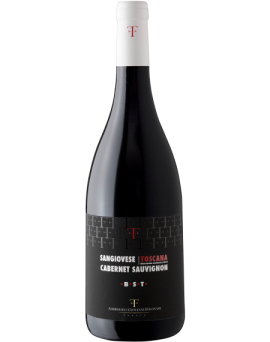
B.S.T. Baby Super Tuscan...
SANGIOVESE E CABERNET SAUVIGNON 2020<br />Indicazione Geografica Tipica (IGT)<br /><br />THE IDEA<br />They are called BABY SUPER TUSCAN because, unlike their Senior Super Tuscan cousins, they age exclusively in steel vats, a technique that makes these wines<br />pleasant, fresh and ready to drink, characterised by fruity notes and softness of taste.<br /><br />About the wine:<br />The typical blend of Supertuscans of central Tuscany, in the heart of the historical appellations, it shows the freshness of the fruit and the floral notes of Sangiovese and also<br />the strength and structure of Cabernet Sauvignon. The ideal wine to enjoy with friends, it is the everyday perfect pairing.<br /><br />Tasting: The 2020 vintage reveals delicate hints of cherry and orange peel. Pleasant mouthfeel sensations of freshness characterise a firmly structured Baby Super Tuscan<br />with a long finish.<br />Pairing: it goes well with anything that is red in colour, it is the ideal for a happy hour, it is special and surprising paired with Pizza and Mediterranean toppings, cold cuts,<br />finger food and street food<br /><br />First vintage: 2015<br />Serving temperature: from 15 ° C to 18 ° C<br />GRAPES<br />Grape varieties: 55% Sangiovese - 45% Cabernet Sauvignon grapes grown on our estates<br />CELLAR<br />Vinification: the grapes are harvested when they reach a perfect ripeness. Fermentation at a temperature<br />of 28 ° C and maceration on the skins takes place in steel vats,<br />Aging: always in steel vats, it is characterised by very frequent and oxygenating rackings<br />Refinement: in the bottle for at least 2 months<br />
Price
€14.40
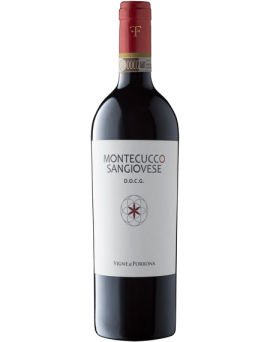
Montecucco Sangiovese 750ml...
The Wine<br /><br />A Sangiovese from the Tuscan Maremma within the Montecucco DOCG appellation and aged in French toasted oak barrels. A complex and firmly structured wine thanks to<br />the good pedo-climatic features of Vigne a Porrona that lies on the gentle hills on the slopes of Mount Amiata a few kilometres from the Tyrrhenian Sea.<br />Tasting: The 2019 vintage stands out for its aromas of macerated mixed spring flowers, dried cherry, bark, espresso, ash and spice woody notes. Medium to full-bodied with<br />firm tannins. Mouthfeel sensations of great freshness and pleasantness of taste. Full-flavoured on the finish.<br />Pairing: Villa di Nozzole suggest pairing it with ravioli filled with wild boar and cinnamon and roast and parmesan sauce.<br />First vintage: 2008<br /><br /><br />The Field<br /><br />Production Area: made from grapes grown in the vineyards of Tenuta di Vigne in Porrona in the municipality of Cinigiano, province of Grosseto, 2 km south/east of<br />Montalcino<br />Altitude: 350 MSL<br /><br /><br />The Grapes<br /><br />Grape variety: Sangiovese<br />Planting pattern: 5,500 - 6,000 plants per hectare<br />Production per hectare: on average 7 tons of grapes<br />Grape yield: about 70%<br /><br /><br />In the winery<br /><br />Vinification: fermentation with maceration on the skins for about 25 days in stainless steel vats at a controlled temperature<br />Aging:in 500-litres tonneaux<br />
Price
€15.80
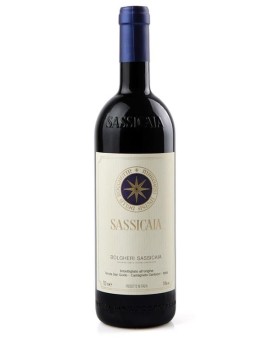
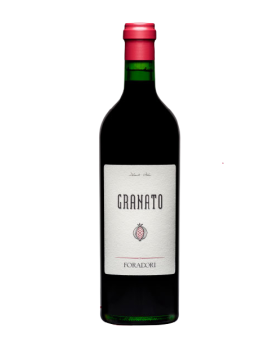
Teroldego Granato 2021...
<br />Granato<br /><br />Grapevines and pomegranates share a common origin and often go together in the Mediterranean basin. The fruit of the pomegranate also possesses the charm, beauty and<br />intensity of the fruit of the vine.<br /><br />It is from this ideal combination that the name 'Granato' is inspired, the name of a Teroldego of particular concentration and density that has its roots in the stones of three<br />vineyards in the Campo Rotaliano.<br /><br />Appellation: Granato - Teroldego Vigneti delle Dolomiti IGT<br />Variety: Teroldego<br />Vineyard location: old pergolas belonging to the Foradori winery located in Mezzolombardo, in the heart of the Campo Rotaliano area.<br />Surface area of the vineyards: three different plots for a total of 4 hectares.<br />Soil: alluvial, gravelly-pebbly soil<br />Fermentation: in large open vats<br />Aging: 15 months in barrels<br />Annual production: 20,000 bottles<br />
Price
€68.60
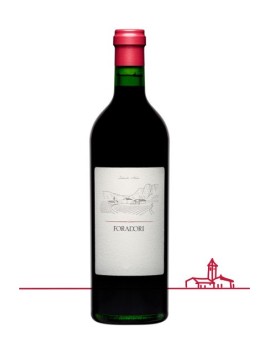
Teroldego 2022 FORADORI 0,75 l
<br />Foradori<br /><br />The Campo Rotaliano is a well-demarcated geographical area, a sort of indentation of the<br />Valle dell'Adige, wedged between the mountains.<br />Its history and formation are linked to the Noce River, which for centuries has carried limestone, granite and porphyritic debris. Within this small plain, depending on the<br />basic soil content, it is possible to differentiate micro zones that have been given different names by the winemakers.<br />It is through gathering together the grapes of some of these micro zones, characterized by predominantly sandy soils and with different quality requirements that the<br />Foradori is born.<br /><br />Name of wine: Foradori - Teroldego Vigneti delle Dolomiti IGT<br />Grape: Teroldego<br />Vineyard location: pergola and guyot vines in Mezzolombardo - Campo Rotaliano<br />Hectares: 9 hectares across various plots<br />Terroir: Alluvial, gravel and sand<br />Fermentation and fining: Cement tanks, 12 months in barrel and cement<br />Annual production: 50.000 bottles<br />
Price
€22.00
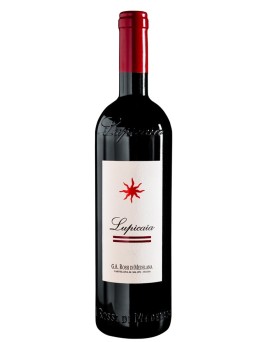
Lupicaia 2018 Castello del...
<br /><br />Denomination: I.G.T. Rosso Toscana (Lupicaia)<br />Producer: Gian Annibale Rossi di Medelana,Vittorio Piozzo di<br />Rosignano Rossi di Medelana<br />First vintage: 1993<br />Grapes: Cabernet Sauvignon, Petit Verdot<br />Analytical data: Alcohol degree: 14.50%.<br />Soil type: The soils are rich in iron minerals with the presence of stones and fossils. Facing the Mediterranean Sea, they benefit from a unique reflection of the sun, a<br />moderate breeze from the coast and the abundance of sunlight promotes unique ripening.<br /><br />Training system: Spurred Cordon<br />Planting density: 3,600 vines/Ha for old vineyards; 5,600 vines/Ha for new vineyards<br /><br />Climatic trend: 2016 was certainly one of the most regular vintages of the last decade. Rainfall met the vines' needs punctually: abundant in March, regular in May and June,<br />important at the end of July and, finally, a warm and sunny August and mid-September. Temperatures were optimal: a mild end to the winter that had caused concern was<br />then regularised by a tenably cool spring that slowed down the development of the bunches, which then benefited from the hot but not torrid summer, with significant<br />temperature swings. Cluster growth was regular and optimal, production was good and ripening was perfect.<br /><br />Harvest period: Harvesting was strictly by hand and took place for the Petit Verdot and Cabernet Sauvignon grapes from mid-September. After an initial selection in the<br />vineyard at the time of manual harvesting, the Lupicaia grapes are carefully selected a second time on arrival at the winery on the sorting table.<br /><br />Winemaking notes: After manual selection on the sorting table, the grapes are gently destemmed and pressed, taking care not to break the skin of the berries. Meticulous<br />alcoholic fermentation takes place in our stainless steel open-cap fermenters at a controlled temperature with maceration of the grapes for about 20 days. Daily dèlestages<br />allowed the perfect extraction of the bouquet<br />aromas and the right tannic balance, with an important structure that will allow for long ageing.<br /><br />Ageing: Ageing takes place in new French oak tonneaux for a period of about 22 months followed by further ageing in bottles before release.<br />
Price
€157.80
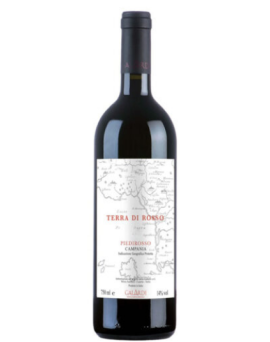
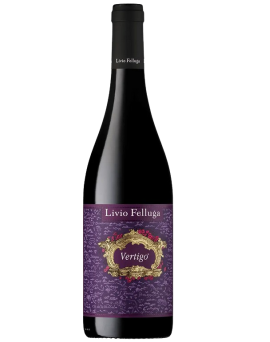
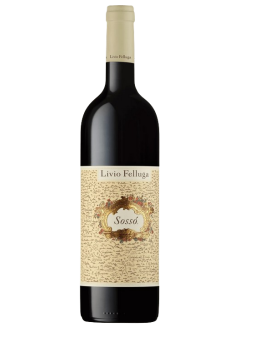
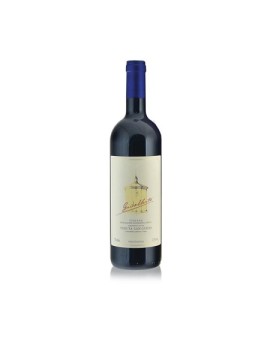
Guidalberto 2022 TENUTA SAN...
TYPOLOGY Dry red wine<br /><br />PRODUCTION AREA Loc. Vecchio Frantoio- Bolgheri<br /><br />VINE 60 % Cabernet Sauvignon, 40 % Merlot<br /><br />SOIL TYPE Strong presence of calcareous areas rich in galestro and stones and partially clayey<br /><br />VINIFICATION Grapes and berries are carefully selected by hand. Soft pressing and destemming of the bunches to avoid breaking the berries and excessive release of<br />tannins. Alcoholic fermentation in stainless steel vats at a controlled temperature of around 26-28 degrees, without the addition of any external yeasts. Maceration in this<br />vintage was about 10-13 days for the Merlot grapes and 13-16 days for the Cabernet Sauvignon grapes, with frequent pumping over and délestages to obtain more balanced<br />musts and favour aromatic extraction. Malolactic fermentation, which began in early November, was also carried out entirely in steel vats, after which the musts were placed<br />in barriques for ageing.<br /><br />VINEYARD SYSTEM Spurred cordon<br /><br />COLOUR Ruby red<br /><br />PERFUME Persistent with floral notes<br /><br />PAIRINGS Red meats, mature cheeses<br /><br />FLAVOUR Excellent roundness, gentleness and sweetness, with an organoleptic depth devoid of sharp edges. Excellent structure with great balance and persistence<br /><br />Classification I.G.T.<br /><br />Alcohol content: 13,00° Vol.<br />
Price
€61.40