
Basket
0
Il Pino di Biserno 750 ml...
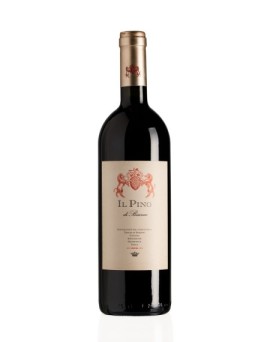
THE PINE OF BISERNO<br />2020<br />TUSCAN IGT RED<br />It is the purest and most direct expression of Bibbona's unique terroir. The special flavour of the grape makes Pino di Biserno a classic with an intriguing aroma,<br />distinguished by its excellent balance and timeless elegance. It shares an identity with its alter-ego, the Biserno.<br />INDICATIVE PERCENTAGE: Cabernet Franc 23%, Merlot 38%, Cabernet Sauvignon 22%, Petit Verdot 17%.<br />SOIL TYPE: Partly clayey, partly Bolgheri conglomerate.<br />GROWTH: The planting system is spurred cordon with a density of 6,500 vines/ha.<br />CLIMATE CONDITIONS: a moderate vintage with more consistent rainfall in the spring months that made temperatures a little cooler than average. Then the heat arrived in<br />early June bringing with it flowering, albeit with a slight delay. The summer recorded average temperatures with a good temperature difference between day and night. It can<br />be considered a good year.<br />HARVEST: Harvest began in the second week of September with the Merlot harvest, then continued with the Cabernet Franc and ended with the Cabernet Sauvignon and<br />Petit Verdot harvest in the first week of October.<br />VINIFICATION: The grapes were carefully selected on the vibrating belt in the cellar. Destemming and soft crushing; alcoholic fermentation in truncated conical steel tanks<br />for 3-4 weeks at 28°, malolactic fermentation in barriques for 25% of the mass, the remainder in steel.<br />AGING: The wine matures partly for 12 months in new and second-passage French oak barriques, the remaining 10% of the volume remains in steel.<br />TASTING NOTES: Ruby red in colour with purple reflections, on the nose it releases a complexity of aromas ranging from ripe red fruits to Mediterranean scrub and delicate<br />notes of tobacco and spices. On the palate it is soft, silky and tasty, calibrated in its dense and elegant tannic texture, long in the finish.<br />ALCOHOL: 14.5%<br />TOTAL ACIDITY: 5.0 G/L<br />PH: 3.67<br />
Price
€60.80
Chablis Grand Regnard 2021...
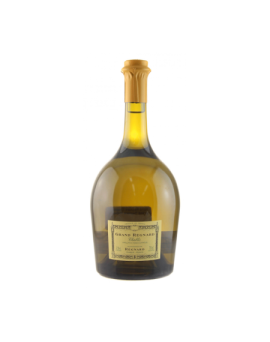
Maison<br />Régnard<br /><br />Characteristics<br />This is a bottle that harks back to the ancient bottles of the 17th century. The Grand Régnard is produced each year, in limited quantities, from a selection of the best crus<br />to bring out the best characteristics of the area using only the first pressing and the 'jus de goutte'.<br /><br />Soil: marly and calcareous-clayey with the subsoil characterised by the presence of fossils.<br /><br />Grape varieties: 100% chardonnay<br /><br />Characteristics of the Cru: Exposure: west<br /><br />Age: 35-year-old vines.<br /><br />Tasting notes:<br />Straw yellow colour with bright, shining reflections. We find intense aromas of tropical fruits, apricot and rennet apple on the nose. On the palate, it is a full-bodied wine with<br />great intensity, in which the mineral notes and freshness are on display, confirming the great and typical characteristics of the best Chablis.<br />
Price
€57.20
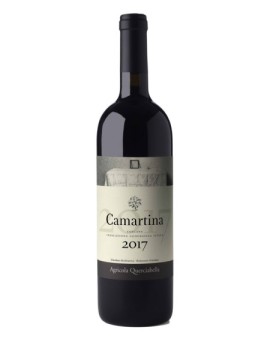
Camartina Toscana Rosso IGT...
Grape varieties: Cabernet Sauvignon (70%); Sangiovese (30%).<br />Characteristics of the Cru:<br />VINEYARDS in Ruffoli, Greve in Chianti.<br />Vineyard Casaocci: south-facing, marl-rich soils, ideal for Cabernet Sauvignon;<br />Poggerino vineyard: dense, clay-rich soils, ideal for long ageing wines;<br />Vineyards Montoro, Solatio and Tinamicaio on sites from 350 to 600 m a.s.l. with south-west to south orientation. Soils rich in marl and clay give the wine silkiness and<br />elegance. Higher up the hill, where sandstone rocks prevail, Sangiovese offers its juiciest and most vibrant expression.<br />VITICULTURE Organic since 1988, biodynamic since 2000.<br />Vinification: the two varieties, harvested and fermented separately, mature for 18 months in fine and extra-fine-grained French oak barriques, up to 30% new.<br />
Price
€115.40
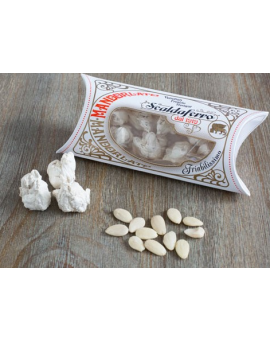
Crumbly almond in oval...
Crumbly nougat with almonds and honey in oval 'gondola' box<br />Mandorlato Scaldaferro is a confectionery product made from roasted almonds mixed with honey, sugar and egg whites whipped until the mixture becomes white, creamy<br />and soft: everything is cooked very slowly.<br />The mixture is then worked by hand, cut into sticks and immediately wrapped while still warm to preserve its aroma and fragrance.<br />The ingredients, all of the highest quality, are one of the product's secrets, such as the special blend of honeys combined to give Mandorlato an unmistakable bouquet, and<br />the Italian almonds carefully selected and roasted directly by the Scaldaferro family.<br />The processing procedure, which involves several hours of baking in a bain-marie, not found in industrial nougats, makes Mandorlato Scaldaferro crumbly and immediately<br />recognisable, characterised by a 'frothy' texture and a slightly amber colour.<br />Another inimitable characteristic of Scaldaferro almonds is that they are laid by hand. Each carton of almonds is laid bow by bow on a bed of wafer, instead of being rolled,<br />pressed and stretched by machine, thus maintaining greater friability and volume.<br /><br />Weight: 150 g<br />Dimensions: 15 × 10 × 8 cm<br />Ingredients: ALMONDS, honey, caster sugar, glucose syrup, EGGS, vanilla, wafer (potato starch, water.<br />Does not contain preservatives, colourings, flavourings. Gluten-free product. May contain traces of other nuts.<br />Serving suggestion: semi-matured cheeses, Gorgonzola, dessert wines, rosolio.<br />
Price
€9.60
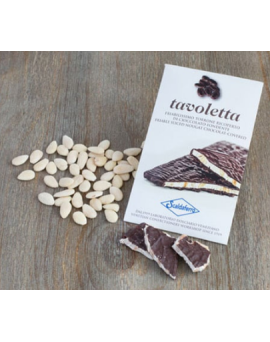
Torrone bar with...
Almond and honey nougat bar only 6 mm thick<br /><br />A new way of eating, suitable both for individual tasting and in catering as a garnish to sweet and savoury dishes and also in combination with cheese or ice cream.<br />An innovative ultrasound cutting technology applied to artisan almonds has allowed the creation of this new product line.<br />Mandorlato is spread in layers in wooden containers to maintain its softness and crumbliness. The confectionery is then wrapped in a soft wafer and cut into very thin slices<br />6 mm thick before it cools.<br /><br />The bars are individually wrapped and packaged, making them easy to enjoy with the family or as a quick snack during the day. As well as being aesthetically pleasing, the<br />bars are so thin they melt in your mouth. The dough of this nougat is also special, as cane sugar is mixed with a different, slightly balsamic blend of Italian honeys.<br />The bar has more than 40% almonds, clearly visible from the cut section, and is presented in an original envelope-shaped package.<br />The dark chocolate used is extremely pure and contains 63% cocoa with a caramelised flavour.<br /><br />Weight: 130 g<br />Dimensions: 22 × 13 × 1 cm<br />Ingredients: ALMONDS, honey, caster sugar, glucose syrup, egg white, vanilla.<br />DARK CHOCOLATE COATING: COCOA PASTE, CANE SUGAR, COCOA BUTTER, EMULSIFIER: SOY LECITHIN, VANILLA, COCOA MIN. 63%<br />Does not contain preservatives, colourings, flavourings. Gluten-free product. May contain traces of other nuts.<br />
Price
€10.00
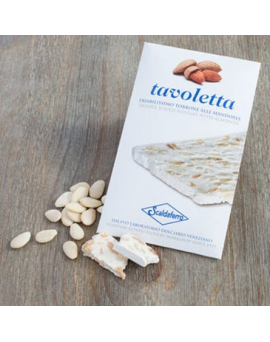
- Out-of-Stock
Almond and honey nougat bar...
Nougat bar with almonds and honey<br /><br />A new way of consumption suitable both for individual enjoyment and in catering as a garnish to sweet and savoury dishes and in combination with cheese or ice cream.<br />Innovative ultrasonic cutting technology applied to artisanal almonds has made it possible to create this new product line.<br />The almond cake is spread in layers in wooden containers to maintain softness and friability. The confectionery is then wrapped in a soft wafer and before it cools, it is cut<br />into very thin slices 6 mm thick.<br /><br />The bars are individually wrapped and packaged, making it convenient to enjoy with the family or as a quick snack during the day. In addition to presenting an aesthetically<br />pleasing section, the bars are so thin that they melt in the mouth. The dough of this nougat is also special, as brown sugar is<br />cane sugar is added a different, slightly balsamic blend of Italian honeys.<br /><br />The bar has more than 40 per cent almonds, clearly visible from the cutting section, and is presented in an original envelope-shaped package.<br /><br />Ingredients: ALMONDS, honey, caster and cane sugar, glucose syrup, egg white, vanilla.<br />Contains no preservatives, colourings, flavourings. Gluten-free product. May contain traces of other nuts.<br />
Price
€8.80
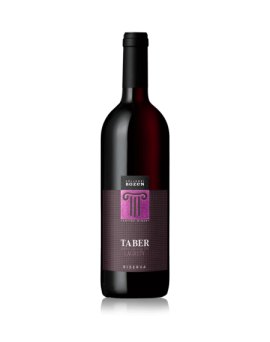
Lagrein 2020 Riserva...
LAGREIN<br />RISERVA<br />South Tyrol - Alto Adige DOC<br />TABER<br />Lagrein, one of the most typical red wine varieties of South Tyrol and of the Cantina Bolzano, thrives in the valley floor around Bolzano at high temperatures differentiated<br />between day and night. The very old vines produce a wine of above-average quality, with concentrated but velvety tannins, juicy fruit and a robust body.<br />Grape variety Lagrein<br />Growing area/climate more than 80-year-old vines on warm, sandy alluvial soils in Gries near Bolzano, 250 metres above sea level.<br />Harvest End of September to mid-October<br />Vinification After traditional red wine fermentation in wooden barrels, the young wine matures for about one year in French barriques.<br />Characteristics Colour: impenetrable garnet red Aroma: fruity of ripe cherries, floral of roses and violets, reminiscent of humus, beautiful chocolate tones<br />Taste: powerful and harmonious with a velvety fullness, long-lasting and<br />elegant<br />Goes well with grilled or cooked dark meat,<br />game and mature cheese<br />Serving temperature 18 °C<br />Alcohol 14 % vol*<br />Residual sugar 4,0 g/l*<br />Waste separation Capsule:42 Tin<br />Bottle closure:FOR 51 Cork<br />Bottle:GL 71 Glass<br />Check the collection system of your municipality<br />* Depending on the vintage, analytical values may vary slightly<br />
Price
€50.60
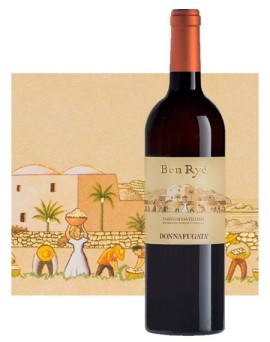
Ben Ryè 2020 di pantelleria...
Ben Ryé<br />One of the world's most popular Italian sweet wines<br /><br />Name: Passito di Pantelleria DOC<br />Grape variety: Zibibbo (Moscato di Alessandria)<br />Production area: Pantelleria vineyards and wineries<br /><br />Ben Ryé 2020 has a golden colour with light amber reflections. It offers a very intense bouquet, ranging from fruity notes of apricot and candied orange peel to hints of<br />Mediterranean maquis. The fruity notes, hints of aromatic herbs and sweet honey nuances return on the palate. Intense and persistent, with an exceptional balance between<br />freshness and sweetness, Ben Ryè is a beguiling Passito di Pantelleria, one of the most popular sweet wines in the world.<br />At the table<br /><br />Caramelised roast duck, foie gras, herb cheese, biscuits and high quality chocolate.<br /><br />Optimal serving temperature 14°.<br /><br />Vinification: in steel vats at a controlled temperature; during the fermentation of the must, the destemmed and hand-picked dried grapes are gradually added. During<br />maceration, the exceptional sweetness, freshness and very personal aroma of the dried grape are released.<br /><br />Alcohol and analytical data<br />Alcohol content: 14.27<br />Total acidity: 7.5 g/l<br />pH value: 3.88<br />Residual sugar: 192 g/l<br />
Price
€36.00
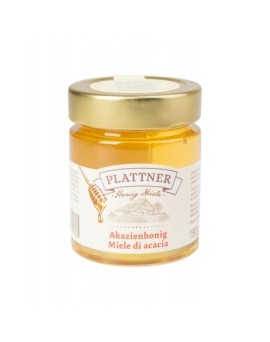
Bienenhof Acacia Honey 190g...
Pale often yellowish-golden honey, smells sweet and unobtrusive, reminiscent of vanilla in the mouth, is obtained from the nectar of the (often) white robinia flowers.<br /><br />Our Plattner Bienenhof Acacia Honey is harvested from the large (often) white flowers of the false acacia (robinia). Its mildly fine, sweetish taste is reminiscent of vanilla and<br />its smell of fresh beeswax and delicate flowers. Acacia honey is very popular with children, suitable as a sweetener and remains liquid for a long time. Our Plattner<br />Bienenhof Acacia Honey comes from natural, intact forests.<br /><br />On average, our honey contains approx. 17-19% water, approx. 70% simple sugars (carbohydrates in the form of glucose and fructose), approx. 2.5% sucrose, approx.<br />0.1% other sugars and approx. 8% other substances. These naturally occurring components are: Acids, lactones, mineral salts, proteins, amino acids, vitamins, colloids<br />and aromatic substances.<br /><br />Honey, with about 300 kilocalories per 100 grams, is an energy-rich natural product, quickly digestible and well and rapidly absorbed by the body.<br /><br />Honey is a living food!<br /><br />It is even said to have some interesting positive properties on the human body: sedative (calming), antiseptic (germicidal), antianemic (increases red blood cells), diuretic<br />(increases water excretion), and many more.<br /><br />The freshly harvested honey is liquid, but can crystallise over time. This process is quite natural and the crystallised honey can be liquefied again in a warm water bath (up<br />to 40° C).<br /><br />Honey is not suitable for children or babies under 12 months.<br /><br />Country of origin: Italy<br />
Price
€6.70
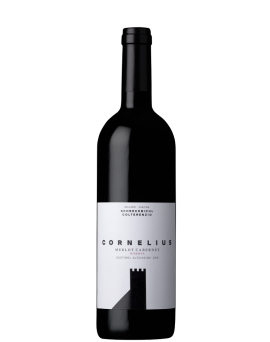
Merlot/Cabernet Cornelius...
Description: Deep and concentrated fruit, aromas of blackcurrant, cocoa, cinnamon and vanilla as well as velvety tannins make up this full-bodied yet elegant cuvée.<br />Ageing potential: 10 - 15 years.<br />Recommended food: Meat dishes of all kinds, especially red meat and game dishes as well as mature cheese.<br />Serving temperature: 16° C.<br />Grape variety: 80% Merlot - 20% Cabernet. Older trellised vines (15 - 20 years), planting density 5,000 vines/ha.<br />Sites: vineyards at 250-430 m a.s.l., moraine rubble deposits and porphyry weathered soils, south-west facing.<br />Vinification: Must fermentation followed by maceration for 7-10 days, malolactic fermentation in barriques. In spring, first racking with assemblage of the two varieties and<br />further ageing for 14 months in small oak barrels. Gentle coarse filtration and filling. Matures for 12 months in bottle.<br />Analytical values:<br />Alcohol: 13,5% Vol<br />Total acidity: 4,9 g/l<br />Residual sugar: 1,8 g/l<br />
Price
€37.60