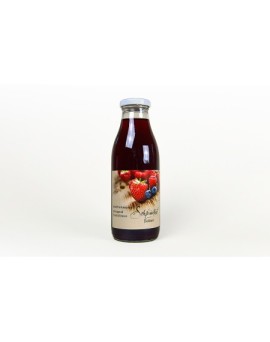
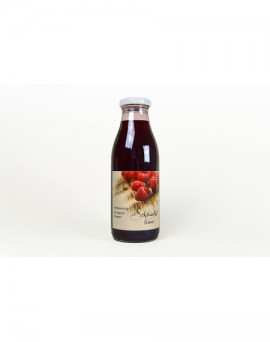
The Schmiedhof is located at 1,200 m, above Platt, in the rear Passeier Valley.<br />The Prugger family grows strawberries, raspberries and blackberries (blueberries) on their farm. Due to the high altitude, the fruits achieve an excellent aroma.<br /><br />Ingredients: Sugar, water, forest fruit juice 27% (strawberry juice, raspberry juice, black currant juice, blueberry juice).<br />Contents: 500 ml<br />Producer: Schmiedhof, Platt in Passeier<br />Dilution ratio: 1:7<br />
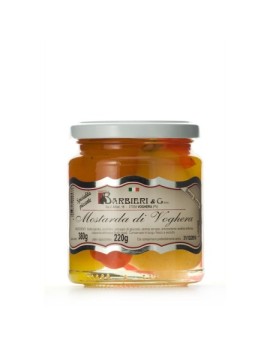
MOSTARDA DI VOGHERA ASSORTED<br /><br />Mostarda di Voghera is a sweetly spicy speciality: whole candied fruit dipped in a mustard-flavoured syrup, traditionally served with meats and cheeses, but also used to fill<br />delicious ravioli, or sweet shortcrust pastry tortelli...<br /><br />A surprise for every palate!<br /><br />Ingredients: candied fruit, sugar, glucose syrup, mustard flavouring, antioxidant: sulphur dioxide, colouring: erythrosine (red fruits). Store in a cool, dry place.<br /><br />drained weight: 220g<br />
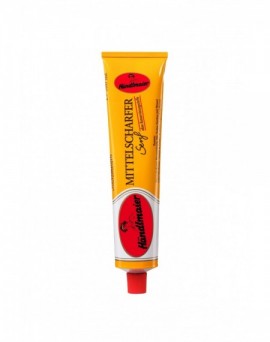
Medium hot mustard is one of the most popular varieties in Germany.<br />Fresh mustard seeds are ground twice in the traditional way. This makes this mustard particularly creamy and, with its pleasant pungency, an all-rounder.<br />A poem to schnitzel, sausage, meat and roulade, a pacemaker in dressings and sauces.<br /><br />This mustard is:<br />Lactose-free<br />Vegetarian<br />Vegan<br />Gluten-free<br /><br />Ingredients Medium hot mustard:<br />Water, mustard seeds, spirit vinegar, table salt, sugar, spices.<br /><br />Nutritional information:<br />Average nutritional values per 100 ml:<br />Energy: 377 kJ / 90 kcal<br />Fat: 4.9 g<br />of which saturated fatty acids: 0.4 g<br />Carbohydrates: 3,4 g<br />thereof sugar: 2,7 g<br />Protein: 6,0 g<br />Salt: 2.9 g<br />
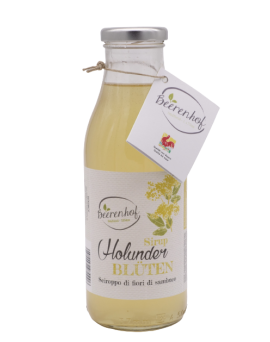
... tastes very refreshing and is not too sweet. The syrup can be diluted with water as desired - our suggestion: 1:7.<br /><br />Ingredients: 60% elderflower extract (water, high proportion of elderflowers), sugar, juice of the Northern Lemon (Chaenomeles japonica or also Cido).<br /><br />Depending on the weather (autumn must be warm, otherwise the harvest will fail), the black and blue elderberries are sometimes also made into syrup and fruit spreads.<br /><br /><br />Info on the Nordic lemon<br />The Nordic lemon contains more vitamin C than the conventional lemon. Temperatures as low as -40°C are no problem for them. That is why it is ideally suited for cultivation in our fields. Originally it comes from Latvia, where it is still cultivated and used today as 'the' lemon. Its fruit is very acidic and not suitable for immediate fresh consumption. We use the juice of the Nordic lemons as a substitute for citric acid, which is partly produced artificially. The plant of the Nordic lemon blossoms fiery red from April to June and has a refreshing fragrance. The fruits are harvested in mid-October.<br /><br />Average nutritional values per 100ml<br />Energy: 680kJ/160kcal<br />Fat: < 0,5g<br />thereof saturated fatty acids: < 0,1g<br />Carbohydrates: 40g<br />thereof sugar: 40g<br />Protein: < 0,5g<br />Salt: 0.10g<br /><br />