The bergamot of Calabria is a unique citrus fruit in the world and is characterised by its intense and strong aroma.<br />This speciality, made from whole, cut and selected fruit, is excellent for filling spicy tarts and sweet pies.<br />Product Details<br />Denomination: Organic bergamot jam<br />Net weight: 280g<br />Ingredients:<br /><br />Bergamot* 50%<br />cane sugar*<br />water<br />gelling agent: locust bean gum*<br />antioxidant: ascorbic acid *Organic ingredients<br />Occasional presence of seeds cannot be excluded<br />Origin of raw materials EU and non-EU.<br />Fruit Used: 50g per 100g<br />Total Sugars: 45g per 100g<br /><br />Storage Method:<br />Store in a cool, dry place, away from light and heat sources. After opening store in the refrigerator and consume within a few days.<br />Shelf Life:<br />3 years from date of manufacture<br />Nutritional values: AVERAGE NUTRITIONAL VALUES PER 100g OF PRODUCT<br />Energy in KJ: 824<br />Energy in Kcal: 194<br />Fats: 0g<br />Of which saturated fatty acids: 0g<br />Carbohydrates: 48g<br />Of which Sugars: 45g<br />Protein: 0g<br />Salt: 0.02g<br />
Denomination: Organic Extra Orange Jam<br />Net weight: 300g<br />Fruit sugars: Fruit used: 75g per 100g, total sugars: 63g per 100g<br />Ingredients: Oranges* 75% Cane sugar* Lemon juice* *Organic ingredient Storage Method: Store in a cool, dry place, away from light and heat sources. Store in the fridge<br />after opening and consume within a few days. Shelf Life: 36 months from date of production.<br />Nutritional values: AVERAGE NUTRITIONAL VALUES PER 100g OF PRODUCT<br />Energy in KJ: 1114 Energy in Kcal: 263<br />Fats: 0g Of which Saturated Fatty Acids: 0g<br />Carbohydrates: 63g Of which Sugars: 61g<br />Fibres: 3.4g<br />Protein: 0.7g<br />Salt: 0g<br />
Plattner Bienenhof Orange Honey is harvested from the nectar of the white blossoms of the evergreen orange bush. It smells delicately of flowers and freshly of orange and<br />also tastes like it. Plattner Bienenhof orange honey is a versatile, precious edible honey.<br /><br />On average, our honey contains approx. 17-19% water, approx. 70% simple sugars (carbohydrates in the form of glucose and fructose), approx. 2.5% sucrose, approx.<br />0.1% other sugars and approx. 8% other substances. These naturally occurring components are: Acids, lactones, mineral salts, proteins, amino acids, vitamins, colloids<br />and aromatic substances.<br /><br />Honey, with about 300 kilocalories per 100 grams, is an energy-rich natural product, quickly digestible and well and rapidly absorbed by the body.<br /><br />Honey is a living food!<br /><br />It is even said to have some interesting positive properties on the human body: sedative (calming), antiseptic (germicidal), antianemic (increases red blood cells), diuretic<br />(increases water excretion), and many more.<br /><br />The freshly harvested honey is liquid, but can crystallise over time. This process is quite natural and the crystallised honey can be liquefied again in a warm water bath (up<br />to 40° C).<br /><br />Honey is not suitable for children or babies under 12 months.<br /><br />Country of origin: Italy<br />
Its colour varies from nut-brown to amber and it smells of wood, its taste is bittersweet. This varietal honey is obtained from the nectar of the chestnut tree blossom.<br /><br />Our popular Plattner Bienenhof chestnut honey is made from the nectar of the chestnut tree blossom and tastes slightly tart. It reminds of tannins and wood in the nose as<br />well as in the mouth. These flavours make it slightly less sweet and more liquid compared to others. Plattner Bienenhof Kastanien honey is a great accompaniment to<br />mature cheese, but also tastes great when enjoyed traditionally.<br /><br />On average, our honey contains about 17-19% water, about 70% simple sugars (carbohydrates in the form of glucose and fructose), about 2.5% sucrose, about 0.1% other<br />sugars and about 8% other substances. These naturally occurring components are: Acids, lactones, mineral salts, proteins, amino acids, vitamins, colloids and aromatic<br />substances.<br /><br />Honey, with about 300 kilocalories per 100 grams, is an energy-rich natural product, quickly digestible and well and rapidly absorbed by the body.<br /><br />Honey is a living food!<br /><br />It is even said to have some interesting positive properties on the human body: sedative (calming), antiseptic (germicidal), antianemic (increases red blood cells), diuretic<br />(increases water excretion), and many more.<br /><br />The freshly harvested honey is liquid, but can crystallise over time. This process is quite natural and the crystallised honey can be liquefied again in a warm water bath (up<br />to 40° C).<br /><br />Honey is not suitable for children or babies under 12 months.<br /><br />Country of origin: Italy<br />
Its colour varies from nut-brown to amber and it smells of wood, its taste is bittersweet. This varietal honey is obtained from the nectar of the chestnut tree blossom.<br /><br />Our popular Plattner Bienenhof chestnut honey is made from the nectar of the chestnut tree blossom and tastes slightly tart. It reminds of tannins and wood in the nose as<br />well as in the mouth. These flavours make it slightly less sweet and more liquid compared to others. Plattner Bienenhof Kastanien honey is a great accompaniment to<br />mature cheese, but also tastes great when enjoyed traditionally.<br /><br />On average, our honey contains about 17-19% water, about 70% simple sugars (carbohydrates in the form of glucose and fructose), about 2.5% sucrose, about 0.1% other<br />sugars and about 8% other substances. These naturally occurring components are: Acids, lactones, mineral salts, proteins, amino acids, vitamins, colloids and aromatic<br />substances.<br /><br />Honey, with about 300 kilocalories per 100 grams, is an energy-rich natural product, quickly digestible and well and rapidly absorbed by the body.<br /><br />Honey is a living food!<br /><br />It is even said to have some interesting positive properties on the human body: sedative (calming), antiseptic (germicidal), antianemic (increases red blood cells), diuretic<br />(increases water excretion), and many more.<br /><br />The freshly harvested honey is liquid, but can crystallise over time. This process is quite natural and the crystallised honey can be liquefied again in a warm water bath (up<br />to 40° C).<br /><br />Honey is not suitable for children or babies under 12 months.<br /><br />Country of origin: Italy<br />
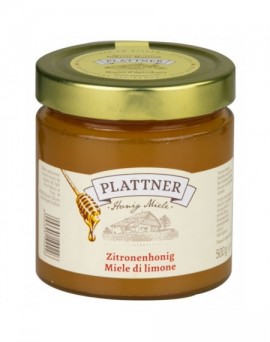
Plattner Bienenhof lemon honey is harvested from the nectar of the seductively fragrant blossoms of the lemon bush. It smells delicately of flowers and freshly of citrus fruits.<br />In the mouth it tastes as flowery and fresh as it smells. Plattner Bienenhof lemon honey is a great edible honey and can be used in many ways.<br /><br />On average, our honey contains about 17-19% water, about 70% simple sugars (carbohydrates in the form of glucose and fructose), about 2.5% sucrose, about 0.1% other<br />sugars and about 8% other substances. These naturally occurring components are: Acids, lactones, mineral salts, proteins, amino acids, vitamins, colloids and aromatic<br />substances.<br /><br />Honey, with about 300 kilocalories per 100 grams, is an energy-rich natural product, quickly digestible and well and rapidly absorbed by the body.<br /><br />Honey is a living food!<br /><br />It is even said to have some interesting positive properties on the human body: sedative (calming), antiseptic (germicidal), antianemic (increases red blood cells), diuretic<br />(increases water excretion), and many more.<br /><br />The freshly harvested honey is liquid, but can crystallise over time. This process is quite natural and the crystallised honey can be liquefied again in a warm water bath (up<br />to 40° C).<br /><br />Honey is not suitable for children or babies under 12 months.<br /><br />Country of origin: Italy<br />