Medium hot mustard is one of the most popular varieties in Germany.<br />Fresh mustard seeds are ground twice in the traditional way. This makes this mustard particularly creamy and, with its pleasant pungency, an all-rounder.<br />A poem to schnitzel, sausage, meat and roulade, a pacemaker in dressings and sauces.<br /><br />This mustard is:<br />Lactose-free<br />Vegetarian<br />Vegan<br />Gluten-free<br /><br />Ingredients Medium hot mustard:<br />Water, mustard seeds, spirit vinegar, table salt, sugar, spices.<br /><br />Nutritional information:<br />Average nutritional values per 100 ml:<br />Energy: 377 kJ / 90 kcal<br />Fat: 4.9 g<br />of which saturated fatty acids: 0.4 g<br />Carbohydrates: 3,4 g<br />thereof sugar: 2,7 g<br />Protein: 6,0 g<br />Salt: 2.9 g<br />
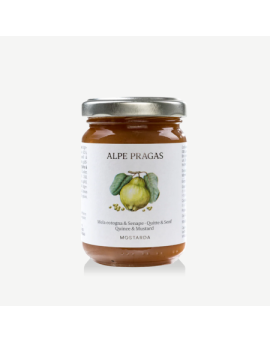
<br />Quince mustard sauce<br />Delicatessen sauce with mustard flavour in a small jar.<br /><br />A delicious sauce made from quince to flavour raw milk and fresh cheeses, with cheese or meat fondue and roasted or grilled meat. This sauce tastes purely of quince with<br />a hint of the pungent mustard oil. Once opened, the sauce should be consumed quickly, as the mustard oil is very volatile and therefore loses its flavour if the jar, which has<br />already been opened once, is stored for a longer period of time.<br /><br />Quince mustard sauce, 125ml<br /><br />Ingredients : Quinces (45%), sugar, dextrose, natural MUSTARD OIL, chilli extract, gelling agent: pectin, citrus fibre.<br /><br />Allergens : Mustard and mustard products<br /><br />Nutritional values (Ø / 100g)<br />Energy: 1.526KJ / 359 kcal<br />Fat: 0,3 g<br />of which saturated fatty acids: 0.1 g<br />Carbohydrates: 88,8 g<br />thereof sugar: 83,4 g<br />Protein: 0,3 g<br />Salt: 0,01 g<br />Made in Germany<br />
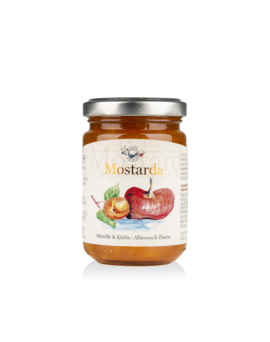
A delicious sauce made from oranges for seasoning raw milk and fresh cheeses, with cheese or meat fondue and roasted or grilled meat. After opening, the sauce should<br />be consumed quickly, because the mustard oil is very volatile and therefore loses its flavour if the jar is stored for a longer period of time once it has already been opened.<br /><br />Orange Mustard Sauce, 125ml<br />Ingredients: Oranges (45%), sugar, dextrose, natural MUSTARD OIL, chilli extract.<br />Allergens: Mustard and mustard products.<br />Nutritional values (Ø / 100g)<br />Energy: 1.437KJ / 338 kcal<br />Fat: 0,1 g<br />of which saturated fatty acids: 0.1 g<br />Carbohydrates: 83,2 g<br />thereof sugar: 79 g<br />Protein: 0,7 g<br />Salt: 0,01 g<br />Shelf life: the exact shelf life is stated on the product label. Once opened, please store in a cool place and consume soon.<br />Made in Germany<br />
Plattner Bienenhof Orange Honey is harvested from the nectar of the white blossoms of the evergreen orange bush. It smells delicately of flowers and freshly of orange and<br />also tastes like it. Plattner Bienenhof orange honey is a versatile, precious edible honey.<br /><br />On average, our honey contains approx. 17-19% water, approx. 70% simple sugars (carbohydrates in the form of glucose and fructose), approx. 2.5% sucrose, approx.<br />0.1% other sugars and approx. 8% other substances. These naturally occurring components are: Acids, lactones, mineral salts, proteins, amino acids, vitamins, colloids<br />and aromatic substances.<br /><br />Honey, with about 300 kilocalories per 100 grams, is an energy-rich natural product, quickly digestible and well and rapidly absorbed by the body.<br /><br />Honey is a living food!<br /><br />It is even said to have some interesting positive properties on the human body: sedative (calming), antiseptic (germicidal), antianemic (increases red blood cells), diuretic<br />(increases water excretion), and many more.<br /><br />The freshly harvested honey is liquid, but can crystallise over time. This process is quite natural and the crystallised honey can be liquefied again in a warm water bath (up<br />to 40° C).<br /><br />Honey is not suitable for children or babies under 12 months.<br /><br />Country of origin: Italy<br />
Its colour varies from nut-brown to amber and it smells of wood, its taste is bittersweet. This varietal honey is obtained from the nectar of the chestnut tree blossom.<br /><br />Our popular Plattner Bienenhof chestnut honey is made from the nectar of the chestnut tree blossom and tastes slightly tart. It reminds of tannins and wood in the nose as<br />well as in the mouth. These flavours make it slightly less sweet and more liquid compared to others. Plattner Bienenhof Kastanien honey is a great accompaniment to<br />mature cheese, but also tastes great when enjoyed traditionally.<br /><br />On average, our honey contains about 17-19% water, about 70% simple sugars (carbohydrates in the form of glucose and fructose), about 2.5% sucrose, about 0.1% other<br />sugars and about 8% other substances. These naturally occurring components are: Acids, lactones, mineral salts, proteins, amino acids, vitamins, colloids and aromatic<br />substances.<br /><br />Honey, with about 300 kilocalories per 100 grams, is an energy-rich natural product, quickly digestible and well and rapidly absorbed by the body.<br /><br />Honey is a living food!<br /><br />It is even said to have some interesting positive properties on the human body: sedative (calming), antiseptic (germicidal), antianemic (increases red blood cells), diuretic<br />(increases water excretion), and many more.<br /><br />The freshly harvested honey is liquid, but can crystallise over time. This process is quite natural and the crystallised honey can be liquefied again in a warm water bath (up<br />to 40° C).<br /><br />Honey is not suitable for children or babies under 12 months.<br /><br />Country of origin: Italy<br />
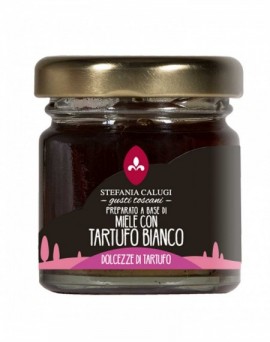
Honey preparation with white truffle<br /><br />Ingredients: Honey (origin Tuscany) 96%, white truffle (Tuber borchii Vitt. - origin Italy)<br />2,5%, white truffle (Tuber magnatum Pico - origin Italy) 1%, aroma.<br />Storage: Once opened, store in the fridge between 0 and + 4° C and consume within a few days.<br />a few days.<br />Nutritional values per 100 g of product:<br />Energy 1429 kJ (336 kcal)<br />Fats 00,0 g<br />of which saturated fatty acids 00,0 g<br />Carbohydrates 78,0 g<br />of which sugars 78,0<br />Protein 6.0 g<br />Salt 0.03 g<br />
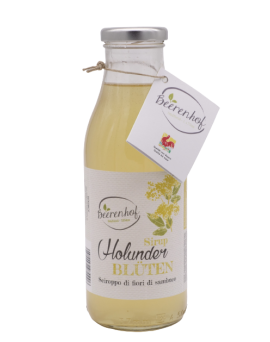
... tastes very refreshing and is not too sweet. The syrup can be diluted with water as desired - our suggestion: 1:7.<br /><br />Ingredients: 60% elderflower extract (water, high proportion of elderflowers), sugar, juice of the Northern Lemon (Chaenomeles japonica or also Cido).<br /><br />Depending on the weather (autumn must be warm, otherwise the harvest will fail), the black and blue elderberries are sometimes also made into syrup and fruit spreads.<br /><br /><br />Info on the Nordic lemon<br />The Nordic lemon contains more vitamin C than the conventional lemon. Temperatures as low as -40°C are no problem for them. That is why it is ideally suited for cultivation<br />in our fields. Originally it comes from Latvia, where it is still cultivated and used today as 'the' lemon. Its fruit is very acidic and not suitable for immediate fresh<br />consumption. We use the juice of the Nordic lemons as a substitute for citric acid, which is partly produced artificially. The plant of the Nordic lemon blossoms fiery red from<br />April to June and has a refreshing fragrance. The fruits are harvested in mid-October.<br /><br />Average nutritional values per 100ml<br />Energy: 680kJ/160kcal<br />Fat: < 0,5g<br />thereof saturated fatty acids: < 0,1g<br />Carbohydrates: 40g<br />thereof sugar: 40g<br />Protein: < 0,5g<br />Salt: 0.10g<br />